In-depth assessment of current policies, tech, culture, and generational dynamics.
Systemic policies and hyper-tech are driving Gen X to Gen Z disengagement. The cost to your Employee Experience and balance sheet is escalating.
To solve a problem, we must first understand its origins. Here, we unpack the core factors fuelling the generational divide: antiquated frameworks, a paradoxical use of technology, and the unmet expectations of a new workforce.
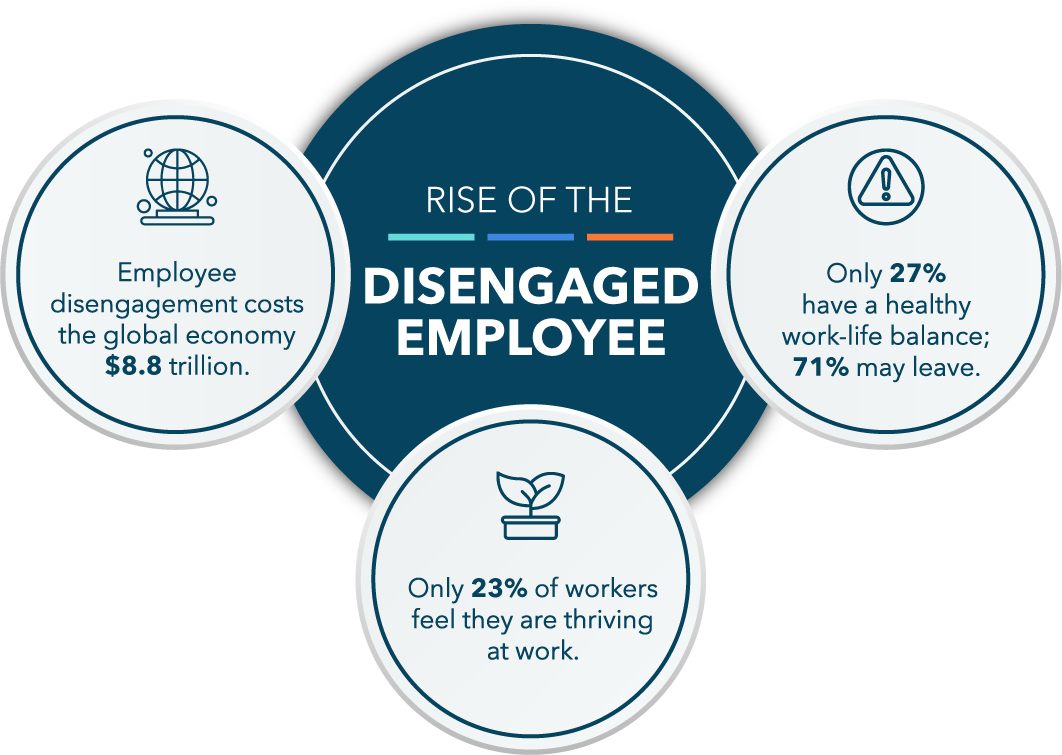
In September 2023, CNBC reported that global employee disengagement now costs the global economy a whopping $8.8 Trillion dollars in annual losses. This immense cost underscores the urgency of the situation: the vast majority of working-class people across the globe are on a bell curve from unprepared to unengaged. If serious reimagination is not implemented this decade, Gen X to Gen Z disengagement is assured for another, companies will not solve for the critical Employee Experience (EX) they covet, and CFO balance sheets will move into "next level" galaxy costs.
Quote in the data – “We’re seeing the symptoms everywhere, but we’re not treating the disease. The cost of quiet quitting is dwarfed by the cost of lost potential.”
About 11,200 baby boomers retire daily in the U.S., according to Protected Income. Born between 1946 and 1964, this generation is reaching retirement age, with the peak expected to continue through 2027.
Often referred to as the "sandwich generation," Gen X values independence, work-life balance, and practical solutions. They appreciate direct communication and autonomy.
Seek purpose-driven work, opportunities for growth, and a positive company culture. They thrive on feedback and collaboration, and are digitally fluent.
Digital natives who prioritize flexibility, authenticity, diversity, and social responsibility. They expect continuous feedback and clear career pathways.
The mass retirement of baby boomers is impacting the workforce and economy on a global scale, causing labor shortages and skill gaps in many industries as experienced workers exit.
If serious reimagination and changes are not implemented into organizational transformation this decade, Gen X to Gen Z disengagement is assured for yet another decade, companies will not solve the critical Employee Experience (EX) they covet and CFO balance sheets will move into “next level” galaxy costs.
Increased turnover, reduced productivity, and higher recruitment costs directly impact the bottom line, leading to significant financial drain.
Disengaged employees lead to a lack of innovation, reduced creativity, and a critical loss of diverse talent, hindering future growth.
Overloading tech without purpose leads to employee frustration, wasted resources, and reduced agility.
Lost Innovation Talent Exodus Eroding Culture Financial Drain
Get Under the Hood of the Data
The turning point is here. It's time to move beyond incremental fixes and embrace a holistic reimagination of human capital. This is where we build the employee experience that not only retains but inspires.
Vision without a plan is just a dream. Our blueprint provides a phased, strategic approach to turn reimagination into reality, tailored to your unique organizational journey.
Aligning organizational purpose with ESG/SDG values resonates deeply with Gen Z and Millennials, fostering a sense of belonging and meaning.
Moving from rigid, one-size-fits-all rules to flexible, human-centric policies that support diverse work styles, fluid career paths, and holistic well-being needs.
Strategically integrating technology to enhance connection, streamline processes, and empower employees, rather than creating friction or replacing critical human interaction.
In-depth assessment of current policies, tech, culture, and generational dynamics.
Co-creating tailored solutions and transformation roadmaps with your leadership team.
Supporting the rollout of new policies, tech, and leadership training programs.
Tracking impact, gathering feedback, and iterating for continuous improvement and value.
Shifting the paradigm from employees as costs to employees as appreciating assets. This involves exploring new metrics for human capital valuation and reporting.
Investing in robust reskilling and upskilling programs tailored to individual and generational needs, fostering a culture of continuous development and internal mobility.
The critical importance of true diversity, equity, and inclusion, and developing leaders who can mentor, inspire, and foster psychological safety across all generations.
To keep employees in place, wage suppression tactics have become common among many companies, including major corporations for a long time.
Every year the U.S. government tells us about the annual wage increase (a 2.9% rate in 2018) but if inflation comes in at 1.9% (as was the case in 2018) what are you left with?
It’s called Prime Ageism and it can affect anyone and everyone, which is why I believe that it is the worst and most prevalent type of discrimination. Ageism doesn’t care
Overengineering tools and systems often leads to burnout, confusion, and lost productivity—ultimately slowing down innovation instead of accelerating progress.
We provide strategic insights and solutions across leadership, talent, diversity, and human capital to help organizations navigate change, drive growth, and build a future-ready workforce.
A new and most important emerging alignment in decades – many companies have not game planned for this.
Diversity cannot be more important today. Far too many companies still do not understand what it really means for profit, prosperity, attraction & more.
SEC has begun requiring talent metrics reporting for disclosure staring in 2021. Public companies are scrambling to determine what to report.
Alignment of Social, National and Global Governance is paramount now. It’s not just Millennials who want this, its Gen Z too.
HR teams need more multi-expertise talent, not chatbot or dashboards to keep tabs of growing Legal/Ethical/Social concerns.
The Multi-Generational workplace is the emerging dynamic, but companies are not ready. Employee engagement and satisfaction, key to employee retention.
Mentoring is a key emerging skill for executive leadership. Leaders have lacked the skill’s to motivate.
The reconceptualizing of the value of employees has already begun. For decades companies valued the employee incorrectly.
Employee reskilling is now a major strategic investment theme. The miscalculation of not reskilling has significantly changed global dynamics.
Vinay Singh MBA, Ed.M. is an Employee Experience Strategist & Executive Officer Advisor/Coach with a unique combination of depth in enterprise business development and academic expertise. 20 years of experience has developed the ability to listen, collaborate, design, implement, lead and execute innovative human capital projects and processes. An ambitious change agent who embraces stakeholder involvement and leverages new talent technologies and innovative organizational processes to achieve strategic corporate goals. A results-focused executive who seeks new ways to develop data-based talent acquisition, mobility, engagement and retention strategies, and inclusion programs. Proven track record of designing pilots and ideating new strategies to maximize cultural change, and diversity. As a trusted and confidential advisor to executive management, he has been consistently regarded as a deep thinker and subject matter expert whose leadership-by-example “active learning” advisory has won him repeat engagements throughout his career.
Get Under the Hood of the Data
Knowledge empowers change. Explore our latest thinking on the future of work, leadership, and human capital to stay ahead of the curve.
To keep employees in place, wage suppression tactics have become